
sowa rigpaSix Senses Vana · Rishikesh
Tibetan Medicine (Sowa Rigpa)
Sowa Rigpa, the Tibetan system of medicine, sold as a five-, seven- or 14-night programme in the Himalayan foothills at Dehradun.
FromUS$11,116per person
By how you want to feel
Answer three questions — what you need, where, and when — and see the retreats that fit.
Open the retreat finderWellness resorts & clinics
By kind of place
Wellness tradition · Tibet & Bhutan
Himalayan medicine, delivered by the state in Bhutan
What happens
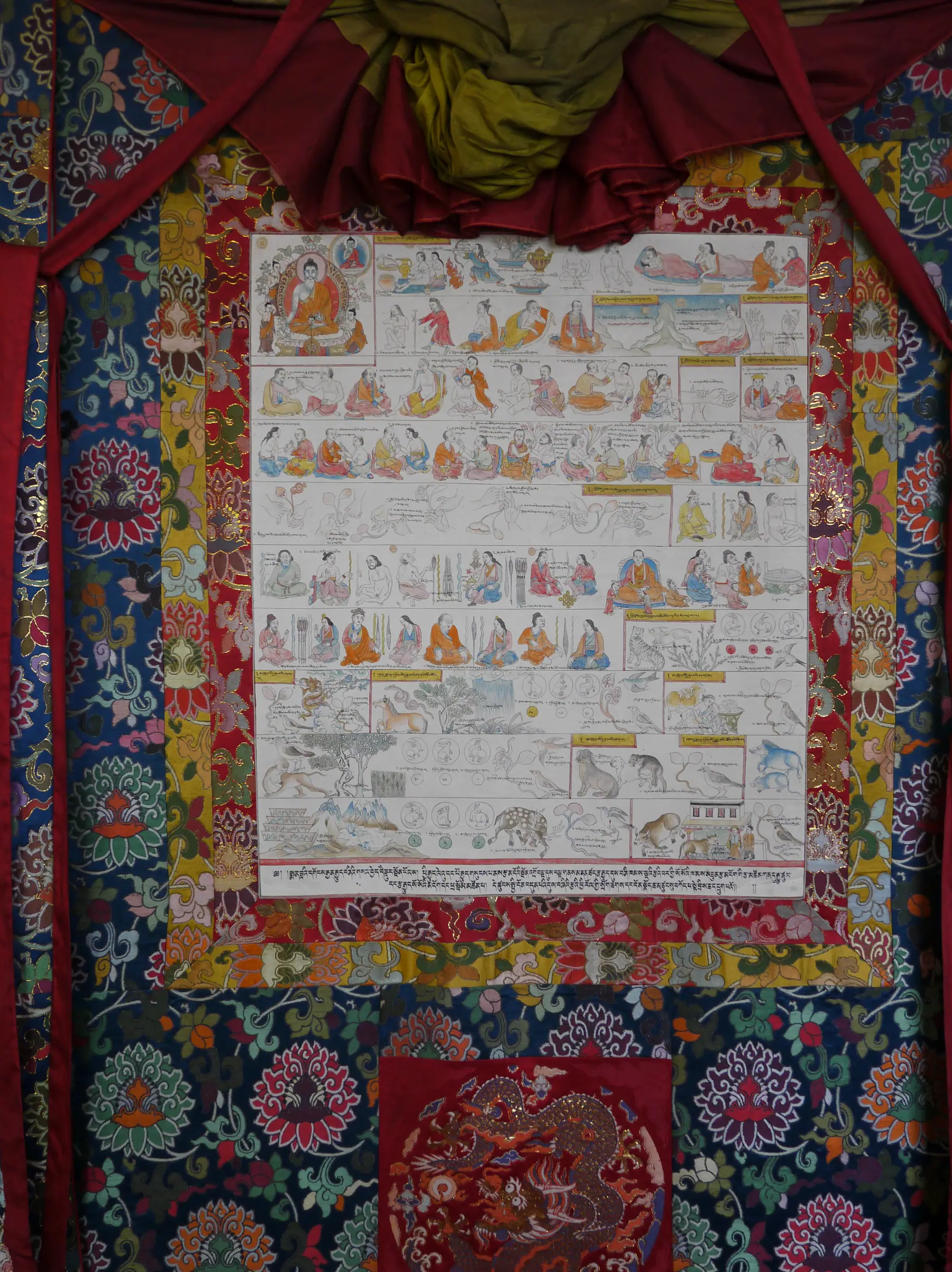
Diagnosis by pulse, urine and questioning, then medicines compounded from Himalayan plants, moxibustion, golden-needle therapy and the menchu — a hot-stone bath in which river stones are heated in a fire and dropped into a wooden tub of water and artemisia. Programmes are short, quiet and paired with walking.
Tibet and the high Himalaya; the shared ancestor of Ayurveda and Chinese medicine.
Regulated in some destinations. One of very few countries where traditional medicine is fully integrated into the public health service: Bhutan runs Sowa Rigpa units inside government hospitals, trains practitioners at a national institute, and manufactures the medicines itself from high-altitude plants.
Programmes
Sowa Rigpa, the Tibetan system of medicine, sold as a five-, seven- or 14-night programme in the Himalayan foothills at Dehradun.
Tell us your dates and budget — a specialist will shortlist the right house, length and month, free.
Research notes
A plain-English guide to the main claims, including where evidence is mixed, limited or based mainly on traditional use.
Not a clinical claim but the most useful fact here: a government funds, trains for and dispenses this system. That is a stronger institutional signal than any marketing.
A small number of formulas have been studied — one for peripheral arterial disease has a modest trial literature — but the great majority of the pharmacopoeia has no modern trial evidence at all.
Central to the system, elaborate, and not validated against modern diagnostics. It is how a Sowa Rigpa physician works; it is not a substitute for investigation.
River stones heated in a fire and dropped into artemisia-infused water. Long tradition, no controlled evidence, and immersion in hot water with a strong herbal infusion needs none to be worth doing.
Some Tibetan formulations historically include processed heavy metals, as in Ayurvedic rasa shastra. Take preparations from the treating institution and declare everything you take at home.
An editorial travel summary, not a systematic review or a medical recommendation. Research evolves; seek current professional advice for personal health decisions.
What a programme may include
Pulse read at several positions and depths, urine examined — the tradition specifies the morning sample — and a structured interview about diet, sleep, digestion and circumstances. Longer and more physical than a western consultation.
Compounded formulas from high-altitude plants, usually as pills taken with hot water at set times relative to meals. The timing is part of the prescription.
River stones heated in a fire until they crack, then dropped into a wooden tub of water infused with artemisia. The stones are added through the stay so the water climbs in heat. The farmhouse version in a village is the real one.
Heat applied at specific points using compressed mugwort. Used for cold and stagnation patterns in the system’s terms; leaves a temporary mark.
Tibetan therapeutic massage with warmed medicated oils, working with the system’s own point and channel map.
A traditional heat-and-pressure technique at specific points on the head and body. Offered by practitioners rather than spa staff, and not universally available.
In more detail
Sowa Rigpa — "the science of healing" — is the Tibetan medical system, and Bhutan is the most interesting place to encounter it because it is one of very few countries where a traditional system is genuinely integrated into the public health service rather than tolerated alongside it. Practitioners train at a national institute, units operate inside government hospitals, and the medicines are manufactured by the state from high-altitude plants.
The system shares its philosophical architecture with Ayurveda — three humours, a constitutional framework, diagnosis by pulse and urine — and diverges through several centuries of Tibetan, Chinese and Greco-Arab contact. Its diagnostic tradition is unusually elaborate: pulse reading at multiple positions and depths, urine analysis conducted at a specified time of day, and a long structured interview.
For a traveller the practical point is that Bhutan offers Sowa Rigpa as medicine rather than as a spa item, and that the country’s tourism policy — a daily levy, no unaccompanied independent travel — makes it an expensive and deliberately low-volume destination. Nobody stumbles into this one.
Facts you can check
Tell them apart
They share an architecture — three humours, constitution, pulse — and diverge in pharmacopoeia, diagnosis and culture after several centuries of separate development under Tibetan, Chinese and Greco-Arab influence. Sowa Rigpa uses high-altitude plants Ayurveda does not, weights urine analysis far more heavily, and is practised inside a Buddhist rather than a Vedic frame.
Read about AyurvedaThe vocabulary
Questions